As a summer intern at HubSpot, I've been drinking a lot of "inbound marketing" kool-aid over the past few weeks. For the uninitiated, inbound marketing is a new way of looking at marketing that focuses on getting found by customers through the web rather than putting tremendous effort and expense into finding customers through direct mail, TV, magazines, etc. There is a great article on the topic on HubSpot's blog. This paradigm shift in the marketing world has been generating some press and HubSpot (a startup that sells software to help small businesses with their inbound marketing) is at the center of the conversation.
The son of a lifelong marketer, I was skeptical about the efficacy of inbound marketing. As a kid, I had loved checking out the TV and print ads my Dad brought home. These ads were placed on TV shows and in magazines where my Dad's company was hoping to find customers. The ads were funny or catchy, and the whole process seemed to work pretty well. I didn't become an inbound marketing convert until we put it into practice this past year at the MIT $100K Entrepreneurship Competition.

The MIT $100K is similar to the small businesses that HubSpot serves. We have a tiny marketing team and extremely limited resources (the vast majority of the money we raise from sponsors goes toward cash prizes for winning teams). In order to get the most bang for our marketing buck, we need to make sure that our marketing efforts will be successful in connecting with the right audience. We faced a particularly difficult challenge this past year in promoting and raising money for an Entrepreneurship Competition in the face of a financial crisis.
Sombit Mishra and I, now Co-Managing Directors of the MIT $100K, got our start on the $100K's Elevator Pitch Contest marketing team. One of our first projects was to create a series of promotional videos that we posted to Facebook and YouTube in an effort to drum up excitement for the event.
The videos pulled in hundreds of views and were very successful in increasing the number of participants and attendees at the Elevator Pitch Contest. This experience drove home one of the core lessons of inbound marketing - create remarkable content. We continued to create funny, inspirational, or informative videos throughout the year. I've created a WebVoter with links to all the MIT $100K Videos. Check them out and vote for your favorite!
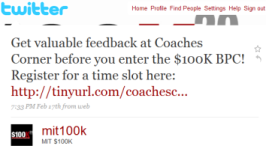
Once we had remarkable content, whether in the form of videos or relevant contest information on our website, we promoted it through multiple channels. Over the course of the year, we increasingly relied on social media channels like our Twitter account to publish information and notifications. We also created landing pages for individual contests (Elevator Pitch, Executive Summary, and Business Plan) and optimized our website so that mit100k.org is the top or near-top result for Google searches related to MIT, entrepreneurship, and business plan contests.
Thanks to our inbound marketing efforts, the $100K enjoyed a record year. The 2009 MIT $100K Business Plan Contest had 260 entries, the most ever in the contest's 20 year history. But, we still have a long way to go. The $100K could do a better job of creating remarkable content to help student entrepreneurs at MIT and beyond build and launch their businesses. In the next year look for the MIT $100K to re-launch our website, start a blog, post relevant elevator pitch, executive summary, and business plan resources, and of course continue to roll out more hilarious videos.


